Estimated reading time: 10 minutes
Key Takeaways
- Engineering and IT degrees in Russia for Pakistani students are the corridor’s strongest non-medical option: Russia has deep technical universities, funded places through the quota and Open Doors, English-taught tracks in IT and some engineering fields, and a 2020 law that lets students work.
- Three degree types matter: the four-year bachelor’s, the five-to-six-year specialist (common in engineering), and the two-year master’s. Each maps differently to Pakistani levels; ask which you are enrolling in.
- Self-funded tuition runs about USD 2,500 to 6,000 a year; dormitories a few thousand rubles a month.
- Language: IT has the most English tracks; core engineering is largely Russian-taught, with a preparatory year funded for scholarship winners.
- Recognition: HEC issues equivalence letters for foreign degrees; for professional engineering registration, the Pakistan Engineering Council has its own rules on foreign qualifications. Check both before enrolling.
- Universities to shortlist: MIPT, ITMO, SPbPU, Bauman, HSE, Innopolis, Kazan Federal, Ufa State Petroleum, Tomsk Polytechnic, Samara, RUDN.
Table of Contents
- Why Russia for engineering and IT
- Bachelor’s, specialist or master’s
- Universities to shortlist
- Language: IT vs core engineering
- Admission requirements
- Fees and living costs
- Scholarships
- Working and internships
- HEC equivalence
- PEC registration for engineers
- Visa and money
- Careers after graduation
- FAQ
- Bottom line
Engineering and IT degrees in Russia for Pakistani students get less attention than MBBS but offer a better deal on several counts: no licensing exam at home, more scholarship places, English tracks in computing, and the right to work during study. This guide covers the degree types, the universities Pakistani students should shortlist, the language reality, the funding routes, and the two Pakistani recognition bodies, HEC and PEC, whose rules decide what the degree is worth back home.
For the visa, see our visa guide; for master’s specifics, our master’s guide.
Why Russia for engineering and IT
- Long-standing strength in mathematics, physics, aerospace, nuclear, petroleum and software; Russian universities are Open Doors organisers across these subject areas, per od.globaluni.ru.
- Government-funded places for foreigners through the quota and Open Doors, per the rules.
- Tuition of USD 3,000–6,000 a year or less, per VisaFromPakistan, and cheap dormitories.
- Full-time students may work without a permit since 2020, per SPbU.
- No IELTS at admission at most universities, per Universities Page.
Bachelor’s, specialist or master’s
- Bachelor’s (bakalavr), 4 years: maps to a Pakistani four-year BS or BE.
- Specialist (spetsialitet), 5–6 years: the traditional Russian engineering degree, still common in fields such as mining, aerospace and some IT security programs; HEC assesses it on duration and content, and it often maps above a bachelor’s.
- Master’s (magistr), 2 years: after a four-year bachelor’s.
Open Doors runs bachelor’s, master’s, doctoral and postdoctoral tracks with age limits of 16–23, 20–33, 22–35 and 24–39 respectively, per the rules. Confirm the exact degree name on the university’s licence before you enrol; it matters for HEC and PEC.
Universities to shortlist
- Moscow: MIPT (physics, applied maths, AI), Bauman (mechanical, aerospace, robotics), HSE (computer science, data), MEPhI (nuclear), Gubkin (oil and gas), RUDN (broad, international-friendly).
- St Petersburg: ITMO (IT, photonics), SPbPU (engineering, energy; dormitories quoted at 2,000–3,500 rubles a month, per SPbPU), St Petersburg State.
- Kazan and Ufa: Kazan Federal (IT, engineering), KNRTU-KAI (aerospace), Ufa State Petroleum (oil and gas), in Muslim-majority republics.
- Innopolis (Tatarstan): an English-medium IT university built for the purpose.
- Regions: Tomsk Polytechnic, Samara, Novosibirsk, Ural Federal for engineering at lower cost, with colder winters and longer journeys.
Check each on HEC’s recognised foreign universities information via its procedure page.
Language: IT vs core engineering
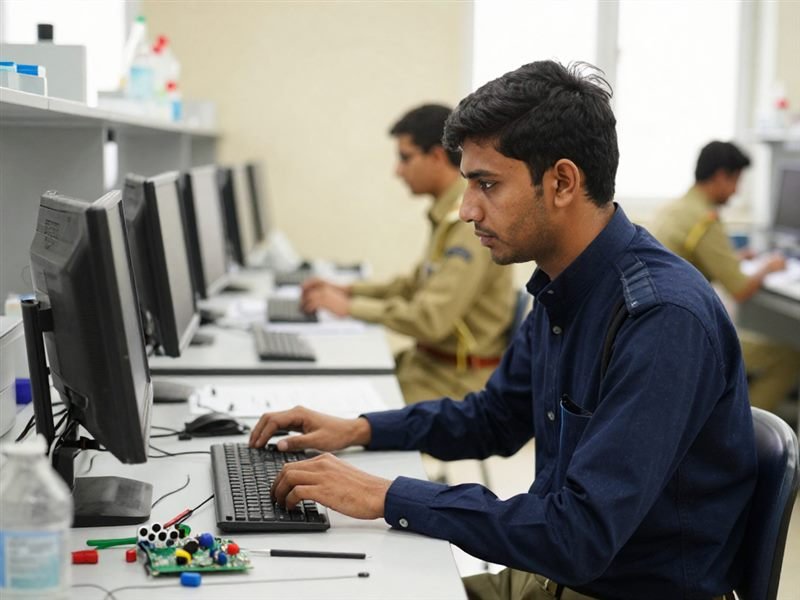
Computing and data programs have the most English-taught tracks; Innopolis teaches in English by design, and ITMO, HSE and SPbPU run English master’s programs. Core engineering (mechanical, civil, petroleum, nuclear) is largely Russian-taught, since most instruction outside designated international tracks is in Russian, per VisaFromPakistan. Scholarship winners in Russian-taught programs get a funded preparatory year, per the rules. Even on an English track, labs, workshops and industry placements run in Russian. See our language guide.
Admission requirements
- Bachelor’s: FSc Pre-Engineering or ICS with strong maths and physics; universities admit on documents, per Universities Page; top technical universities run entrance tests.
- Master’s: a four-year BS or BE in a related field, transcript, statement of purpose; some run tests or interviews.
- All: IBCC or HEC attestation, MOFA apostille, Russian translation; see our attestation guide.
- English tracks: IELTS or a medium-of-instruction letter; Russian tracks: preparatory year or TORFL.
Fees and living costs
Self-funded engineering and IT tuition typically runs USD 2,500–6,000 a year, within the range consultants cite for Russia, per VisaFromPakistan; elite Moscow English programs and Innopolis sit higher. Dormitories are a few thousand rubles a month, per SPbPU; living in regional cities is in the low hundreds of dollars a month. Compared with Pakistani private engineering universities, the fee gap is modest; the value is in the funded places.
Scholarships
- Open Doors: subject areas include engineering, computer science, physics and mathematics; registration 20 August to 1 November 2026, a portfolio, then a proctored exam; winners study within the quota, per the rules. See our Open Doors guide.
- Government quota: via education-in-russia.com and Russian House Karachi, per Pakistan Today; engineering and IT are heavily represented.
- Coverage: tuition and stipend; not travel, housing, food or insurance, per the Open Doors FAQ.
Working and internships
Full-time students at accredited universities may work without a permit with a university certificate and a contract, per SPbU; IT students in particular find paid internships and freelance work. See our work guide. Industrial placements are part of most engineering programs and run in Russian.
HEC equivalence
HEC issues equivalence letters for foreign degrees rather than attesting them, per its attestation page; the application needs the degree and transcript, IBCC-verified school certificates and, for a master’s, the attested bachelor’s, per the procedure page. A Russian specialist degree is assessed on its own duration; keep the diploma supplement with hours. See our HEC guide.
PEC registration for engineers
To practise as an engineer in Pakistan you register with the Pakistan Engineering Council, which recognises foreign engineering qualifications under its own criteria, typically requiring HEC equivalence and an assessment of the program’s accreditation and content against Pakistani standards, and in some cases an examination. Check PEC’s foreign qualification rules before enrolling and choose a program at a state-accredited university with a full four-year or specialist engineering curriculum. This does not apply to IT and computer science graduates, who register with no council.
Visa and money
The in-person visa file with a Ministry of Interior invitation, attested and translated certificates, medicals from approved labs, police certificate, funds and insurance applies, per the Karachi consulate. Money must reach Russia through non-sanctioned routes, per the guidance reported by ProPakistani; see our money guide.
Careers after graduation
- In Pakistan: HEC-equivalised degrees are accepted by employers; engineers add PEC registration.
- In Russia: employer-sponsored work permits; the student work right ends with studies, per the State Duma.
- Elsewhere: Russian technical degrees are assessed case by case by Gulf and Western evaluators; a master’s from a well-known university travels best.
- Further study: Open Doors doctoral track for PhD funding.
FAQ
Can I study engineering in Russia in English?
IT and some master’s tracks, yes; most core engineering is Russian-taught with a preparatory year for scholarship winners, per the Open Doors rules.
Will PEC register a Russian engineering degree?
Under its foreign qualification rules, usually with HEC equivalence and an assessment; check PEC before enrolling.
How much does it cost?
About USD 2,500–6,000 a year tuition plus cheap dormitories; scholarships cover tuition and a stipend.
Can I work while studying?
Yes, without a permit as a full-time student at an accredited university, per SPbU.
Bottom line
Engineering and IT degrees in Russia for Pakistani students combine strong universities, real scholarship odds, English tracks in computing and the right to work, with two things to check before enrolling: the language of the specific program, and how HEC and, for engineers, PEC will treat the exact degree. Shortlist an Open Doors organising university on HEC’s list, enter the autumn scholarship rounds, and plan the visa and money route like any other Russia-bound student.