Estimated reading time: 10 minutes
Key Takeaways
- Study abroad without IELTS for Pakistani students is real in Russia, Kazakhstan, Kyrgyzstan, Uzbekistan and, for self-funded places, much of Azerbaijan. State universities there admit on FSc or a bachelor’s degree without an English test.
- “No IELTS” does not mean “no language”. In Russia and Central Asia the language that matters is Russian (plus Kazakh, Kyrgyz or Uzbek), and PM&DC requires medical students to spend six months learning the local language before departure where instruction is not in English.
- Scholarships are stricter than admissions: Azerbaijan’s government grant asks for IELTS 5.0 (bachelor’s) or 5.5 (postgraduate) or proof of English-medium education; Russia’s Open Doors checks proficiency in the chosen language of instruction at enrolment.
- Common substitutes: a medium-of-instruction certificate from your Pakistani school or university, a university internal English test, an interview, or a preparatory year.
- The trap: choosing a country for the absence of IELTS and then failing a Russian-language clinical year, an HSK exam or a licensing exam in English. Test-free entry shifts the language work; it does not remove it.
Table of Contents
- Why so many Pakistanis search for “no IELTS”
- Countries where admission really needs no IELTS
- What replaces IELTS
- Scholarships are stricter than admissions
- The language that actually matters
- PMDC’s six-month language rule
- China and the HSK exception
- Medium of instruction certificate
- Visa officers and English
- When you should just take IELTS
- A decision checklist
- FAQ
- Bottom line
Study abroad without IELTS for Pakistani students is one of the most-searched phrases in the sector because IELTS costs money, takes time and, for many FSc graduates, feels like an extra exam after MDCAT. The good news is that the whole Russia and Central Asia corridor admits without it. The less-advertised news is that the corridor runs on Russian, that scholarships still ask for English evidence, and that the destination with no English test may be the destination with the heaviest language burden overall.
This guide separates where study abroad without IELTS for Pakistani students is a real advantage from where it is a sales line.
Why so many Pakistanis search for “no IELTS”
- UK, Australian and Canadian routes require IELTS or equivalent, often at 6.0–6.5, and the test plus coaching costs tens of thousands of rupees.
- Consultants advertise Russia and Central Asia as “no IELTS” destinations; Kazakhstan, for example, is marketed with admission at 50% marks and no IELTS, per EaziLine, and Kyrgyzstan the same, per StudyAbroad.pk.
- For medical applicants, MDCAT is already the gate that matters, so an English test feels redundant.
Countries where admission really needs no IELTS
- Russia: admission on FSc and passport without an entrance exam at most universities, per Universities Page; English programs exist but most instruction outside international tracks is in Russian, per VisaFromPakistan.
- Kazakhstan: no IELTS at most state universities, per Shiksha Med; Nazarbayev University and some English-medium private universities do require it.
- Kyrgyzstan: admission at 50–60% with no IELTS, per StudyAbroad.pk.
- Uzbekistan: admission on FSc with science subjects, per RMC Edu.
- Azerbaijan (self-funded): many universities accept a medium-of-instruction letter or run an internal test; the government grant is different, below.
- China: no IELTS for most MBBS programs, but an HSK requirement in year one and, from 2026/27, the CSCA entrance assessment, per EaziLine and UrduSky.
What replaces IELTS
- Medium-of-instruction (MOI) certificate from your school, college or university stating that your studies were in English.
- University internal English test or online interview; common at Kazakh and Azerbaijani universities.
- Preparatory year in the local language, which Russian universities run as a preparatory faculty, per StudyAbroad.pk.
- Conditional admission with a language course in the first semester.
Scholarships are stricter than admissions
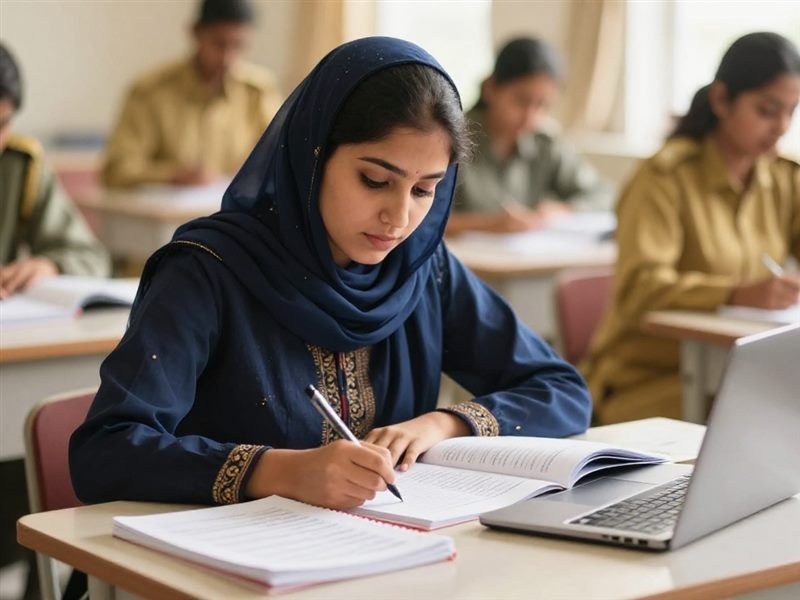
The Heydar Aliyev International Education Grant requires IELTS 5.0 for undergraduate or 5.5 for postgraduate applicants to English-medium programs, or a certificate confirming previous education in English, per the official call. Open Doors winners get priority in program selection subject to documentary evidence of proficiency in the chosen language of instruction, assessed by the admitting university at enrolment, per the rules. If you are chasing a funded place, plan for either an English certificate or a Russian one. See our Azerbaijan scholarship guide and Open Doors guide.
The language that actually matters
In Russia and Central Asia, hospitals, government offices, landlords and most lecturers work in Russian; in Kazakhstan, Kyrgyzstan and Uzbekistan the state languages add a second layer. “English medium” cohorts still take patient histories in Russian from the clinical years. For an Urdu speaker, Russian to a working level takes six months of daily study before departure and a year of immersion after. Our Russian language guide sets out a plan.
PMDC’s six-month language rule
For medical students, PM&DC’s policy states that where the medium of instruction is not English, the student must spend a minimum of six months learning the local language before proceeding abroad, and that non-compliance makes the graduate ineligible for the NRE, per the policy. Keep dated certificates from a Russian course. A “no IELTS” admission that leads to a Russian-taught clinical program therefore carries a formal language requirement of its own. See our PMDC guide.

China and the HSK exception
China waives IELTS for most MBBS admissions but requires students to pass HSK-3 or HSK-4 in the first year to progress, per EaziLine, and is introducing the CSCA for international undergraduates from 2026/27, per UrduSky. That is a harder examined language requirement than IELTS for most Pakistani students.
Medium of instruction certificate
Most Pakistani FSc and BS programs are taught in English, so an MOI letter is easy to obtain: request it on letterhead from the principal or registrar, stating the years of study and that English was the medium of instruction and examination. Attest it with IBCC or HEC and MOFA if the destination asks. Universities in Azerbaijan and Kazakhstan routinely accept it; the Azerbaijani grant explicitly allows a certificate of previous education in English in place of IELTS, per the call.
Visa officers and English
Russian consular officers may invite applicants for an interview, per the Karachi consulate. No English test is required, but a student who cannot explain their program, city and funding in English or Russian weakens the file. See our guide to Russia visa rejection reasons.
When you should just take IELTS
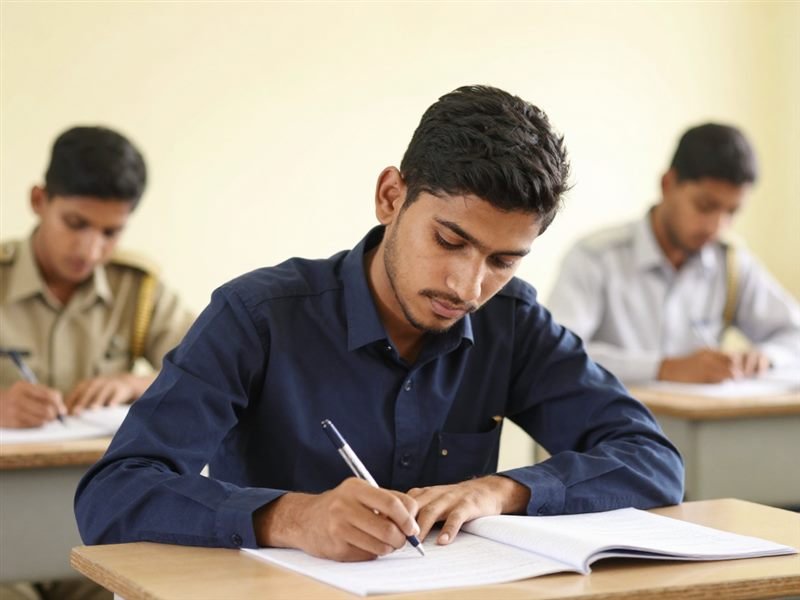
- You are applying for the Azerbaijani grant or an English-medium private university that requires it.
- You want the option of the UK, Ireland, Australia or Canada later; a score is valid for two years.
- Your MOI certificate is weak (Urdu-medium college).
- You plan USMLE or PLAB after a foreign MBBS; PLAB requires IELTS or OET anyway.
A decision checklist
- Is the program genuinely English-taught for every year? Get it in writing.
- What language will hospitals, offices and landlords use? Plan for it.
- Does the scholarship you want require IELTS or Russian proof?
- For medicine, have you scheduled six months of local-language study before departure?
- Do you have an MOI certificate ready and attested?
- Will you need IELTS later for PLAB, OET or a second country?
FAQ
Which countries admit Pakistani students without IELTS?
Russia, Kazakhstan, Kyrgyzstan, Uzbekistan and most self-funded Azerbaijani programs, per the consultant sources above.
Is “no IELTS” the same as “English medium”?
No. Admission may be test-free while teaching and daily life run in Russian.
Do scholarships need IELTS?
Azerbaijan’s grant does (5.0/5.5) or English-medium proof; Russia checks the language of instruction at enrolment.
What is an MOI certificate?
A letter from your institution confirming your studies were in English; widely accepted in place of IELTS.
Bottom line
Study abroad without IELTS for Pakistani students is a fact across Russia and Central Asia, but the test you skip at admission is replaced by the language you must learn to survive the degree. Use the MOI certificate where it works, take IELTS if a scholarship or later licensing demands it, and for medicine schedule PM&DC’s six months of Russian before you fly. Choose the country for its program and recognition, not for the test it does not ask for.