
Estimated reading time: 9 minutes
Key Takeaways
- The cost of living in Kazakhstan for students from Pakistan sits in the middle of the corridor: dearer than Kyrgyzstan and Uzbekistan, cheaper than Russia’s two capitals. Consultants quote all-in annual costs including tuition of about PKR 650,000 to 1,200,000.
- A realistic monthly living budget excluding tuition is roughly USD 200 to 350: university hostel USD 50–120, food USD 100–150, transport USD 15–30, phone and internet USD 10–15, personal USD 30–50.
- Many medical universities charge a compulsory first-year South Asian mess of about USD 1,200–1,400, which is not in the tuition headline.
- Astana is the most expensive city and the coldest; Almaty is pricier than the regional cities but has the best transport and food options; Karaganda, Semey and Shymkent are cheapest.
- Winter clothing is a one-off cost of USD 150–300 in the first autumn and is not optional.
- Students cannot work on a study visa, so the budget must be funded from home; a scholarship stipend of about 52,000 KZT covers a frugal student’s food and transport.
Table of Contents
The cost of living in Kazakhstan for students is the number families need after the tuition quote and before the visa, because Kazakh universities do not permit student work and the whole budget must come from Pakistan. This guide breaks it down by category and city, flags the mess fee that surprises medical students, and ends with a monthly and annual budget you can adjust to the tenge rate on the day.
Figures are from consultant and university sources cited below, converted approximately; the tenge moves, so treat them as bands. For the broader picture see our study in Kazakhstan guide and MBBS in Kazakhstan guide.
The headline numbers
- Consultants quote annual all-in costs of about PKR 650,000–1,200,000 for Pakistani students, per CC Consultings.
- Medical whole-course totals of roughly PKR 60 lakh to 1 crore including hostel are common in consultant material, with compulsory first-year mess of about USD 1,200–1,400 at some universities, per Pacific Education.
- Kazakh universities advertise furnished, secure, gender-separated hostels with halal food, per EaziLine.
Accommodation
- University hostel: USD 50–120 a month depending on city and room type; shared rooms of two to four; usually paid per semester or year.
- Private flat share: USD 150–300 a month per person in Almaty or Astana, less in regional cities; landlord registration must be arranged.
- First-year international students are normally placed in the hostel; it is the cheapest and safest option, and the one the international office registers you at.
The compulsory mess
Several medical universities bundle a compulsory South Asian mess into the first year for foreign students, at about USD 1,200–1,400, per Pacific Education. That is roughly USD 100–120 a month and replaces most of the food line for year one. Ask whether it is compulsory, what it includes, and whether it can be dropped from year two; many students self-cater later at lower cost.
Food and groceries
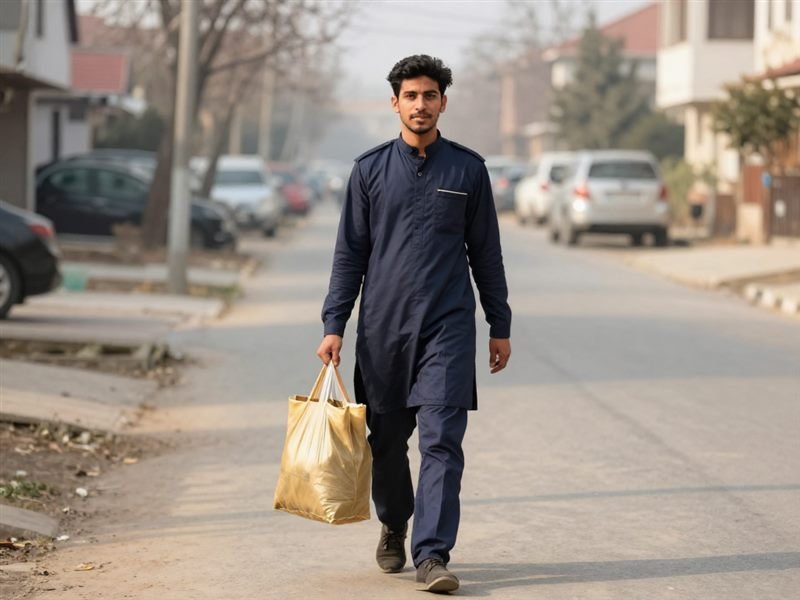
- Self-catering: USD 100–150 a month for a student cooking in the hostel kitchen; halal meat is standard in a Muslim-majority country; rice, flour, pulses, vegetables and dairy are cheap.
- Canteens: a university canteen meal is a dollar or two.
- Eating out: a plov or lagman at a local café is USD 3–5; Pakistani restaurants in Almaty and Astana are dearer.
Transport
Almaty and Astana have cheap buses and, in Almaty, a metro; a student pass or per-ride fares cost USD 15–30 a month. Regional cities are walkable or bus-based at similar or lower cost. Taxis via apps are affordable for occasional use.
Phone, internet and utilities
A local SIM with generous data is USD 5–10 a month; hostel internet is often included or a few dollars. Utilities are included in hostel fees; private flats add USD 30–60 a month, higher in winter.
Winter clothing
Astana routinely drops well below minus 20 and Almaty below minus 10. A proper coat, boots, thermals, gloves and a hat cost USD 150–300 locally in the first autumn; buying in Kazakhstan is cheaper and better suited than buying in Pakistan. Treat this as a compulsory one-off in the first-year budget.

Health and insurance
Insurance is part of the visa file, per CC Consultings, at roughly USD 50–150 a year depending on cover; university clinics handle routine care; arrival medical tests are a small fee. Budget USD 10–20 a month for medicines and incidentals. See our medical test guide.
City by city
- Astana: the capital; highest rents and food prices; hostel USD 80–120; severe winter; home to Nazarbayev University and Astana Medical University.
- Almaty: the largest city; hostel USD 70–110; best transport, restaurants and community; milder than Astana; KazNMU, Al-Farabi, KIMEP.
- Karaganda: hostel USD 50–80; cold; Karaganda Medical University; large South Asian cohort.
- Semey: hostel USD 50–70; cold; Semey Medical University; cheapest living among the medical cities.
- Shymkent: hostel USD 50–80; warmest climate; South Kazakhstan Medical Academy; cheap food.
- Aktobe: hostel USD 50–80; West Kazakhstan Medical University; low cost.
A monthly budget
Regional city, hostel, self-catering (year two onward): hostel USD 60, food USD 110, transport USD 15, phone USD 8, personal USD 30, health USD 12; about USD 235.
Almaty, hostel, mixed eating: hostel USD 90, food USD 140, transport USD 25, phone USD 10, personal USD 50, health USD 15; about USD 330.
Astana, private flat share: rent USD 250, utilities USD 40, food USD 150, transport USD 25, phone USD 10, personal USD 50, health USD 15; about USD 540.
Annual total with tuition
Take tuition (USD 2,000–6,000 for medicine, USD 2,000–5,000 for other fields at state universities), add twelve months of the budget above, add the first-year mess if compulsory, winter clothing in year one, insurance, two flights (direct Lahore or Islamabad to Almaty), visa and attestation, and a 10–15% currency reserve. A regional-city medical student lands at roughly USD 6,000–9,000 in year one and USD 5,000–8,000 thereafter, which matches the consultant PKR ranges above.

Scholarship students
The Kazakhstan government scholarship covers tuition and a monthly stipend reported at about 52,372 KZT for bachelor’s students, per Scholarships.af, with some listings adding dormitory and insurance. That stipend is close to the regional-city food-and-transport line; flights, clothing and extras still come from home. See our scholarship guide.
Ways to cut costs
- Stay in the hostel and self-cater from year two.
- Choose Karaganda, Semey, Shymkent or Aktobe over Astana if the university choice allows.
- Buy winter gear locally at the end of the season for the following year.
- Share a flat with three others only if a landlord will register you.
- Fly on the direct route and book early; two return flights a year are a large fixed cost.
Sending money
Kazakhstan uses normal international banking; Pakistani banks can send to Kazakh accounts, and students open a local account with their IIN and residence registration. Carry declared cash for the first weeks. Unlike Russia, there is no sanctions complication.
FAQ
How much does a student spend per month in Kazakhstan?
Roughly USD 200–350 excluding tuition, depending on city and lifestyle.
Which city is cheapest?
Semey, Karaganda, Shymkent and Aktobe; Astana is dearest.
Is the mess compulsory?
At some medical universities in year one, about USD 1,200–1,400, per Pacific Education; ask before paying.
Can I work to cover costs?
Not on a study visa.
Bottom line
The cost of living in Kazakhstan for students from Pakistan is about USD 200–350 a month on top of tuition, with a compulsory first-year mess at some medical universities, a one-off winter kit, and two flights a year. Pick a regional city if you can, stay in the hostel, self-cater from year two, and budget the full year in advance because a student visa does not permit work.